
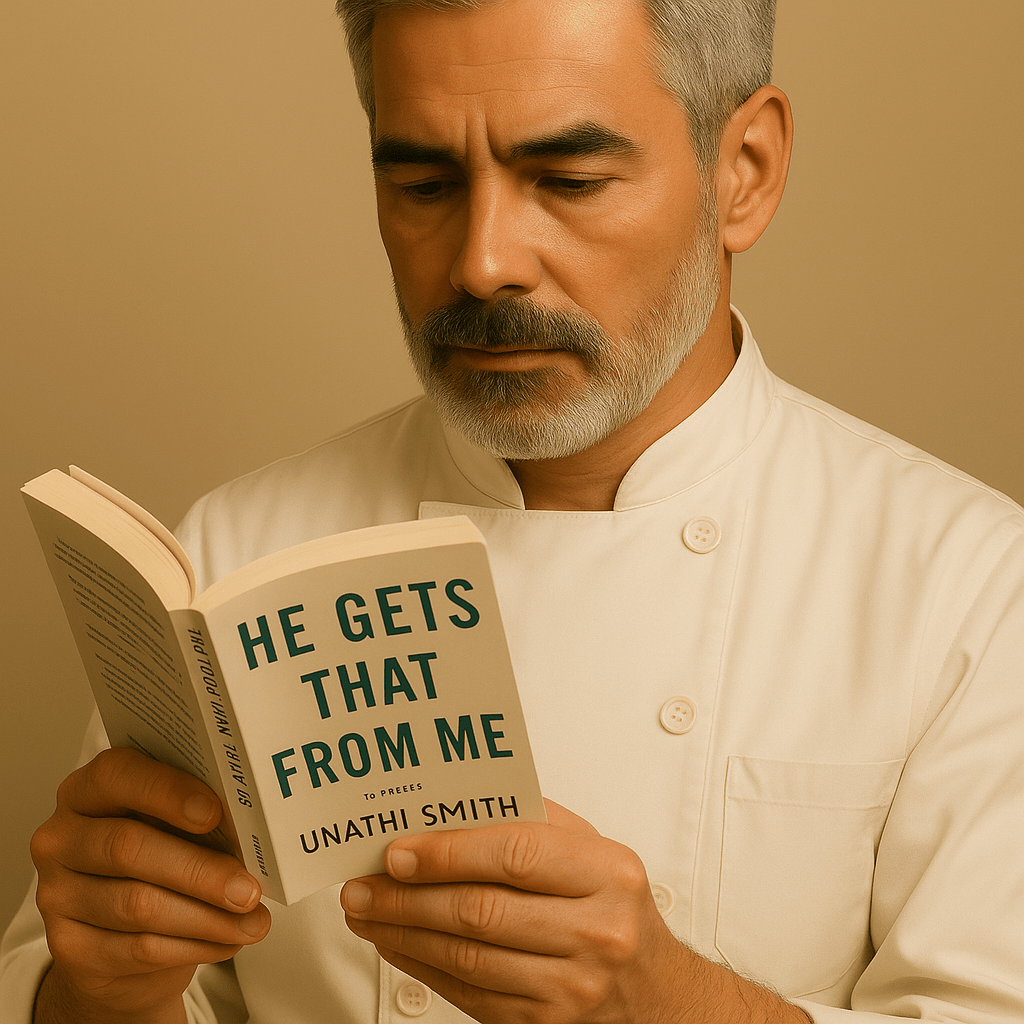
There’s a quiet power to He Gets That From Me by Unathi Smith. It’s a story that unfolds gently, relying more on the internal journeys of its characters than dramatic plot twists. I enjoyed it—for the most part. But a few bumps in the road kept me from fully immersing myself in what could have been a standout read.
What Worked: Intimacy, Emotion, and a Unique Premise
Let’s start with the good. The story has a refreshing premise and is told with a thoughtful, emotional tone. The characters are richly drawn—flawed, vulnerable, and human. The author’s ability to tap into interiority is impressive; you don’t just watch these characters, you feel what they feel. That kind of writing is rare and deserves praise.
Where It Faltered: Descriptive Overload and Editing Misses
But then, mid-emotion, the prose stops to remind you that Macy’s is the flagship store in New York City. Or that the trash can someone throws a coffee cup into is made of metal. These aren’t huge sins, but they break the spell. The narrative flow gets interrupted by unnecessary details—details that make you feel like the author doesn’t trust you to imagine the scene.
Worse, there are grammar and spelling mistakes that should have been caught. “Me” instead of “my.” Things like that. These are the kinds of issues that, unfortunately, make readers think, Ah, this must be self-published. And yes—it is. Which only reinforces the ongoing stigma around editing standards in hybrid and indie publishing.
Is It Still Worth Reading? Yes—If You’re Not a Literary Snob
Despite its flaws, I still liked the book. It didn’t feel cheap or rushed. It felt like a labor of love—just one that could’ve used a second pass by a professional editor. If you’re the kind of reader who can see past technical imperfections and focus on the emotion and character work, you’ll find something worthwhile here.
Final Thoughts
He Gets That From Me isn’t a perfect book—but it is a sincere one. And sometimes, sincerity is more important than polish. I wouldn’t recommend it to grammar-sticklers or those who get twitchy at a dangling modifier. But if you’re open to a quiet story with a big heart, it’s worth your time.
Have you read this book? Did the emotional storytelling outweigh the editing quirks for you? Drop a comment below—I’d love to hear what you thought. And if you enjoy reviews like this, consider subscribing to stay up to date with honest, no-fluff takes on fiction.

Discover more from Tate Basildon
Subscribe to get the latest posts sent to your email.
 Tate Basildon