

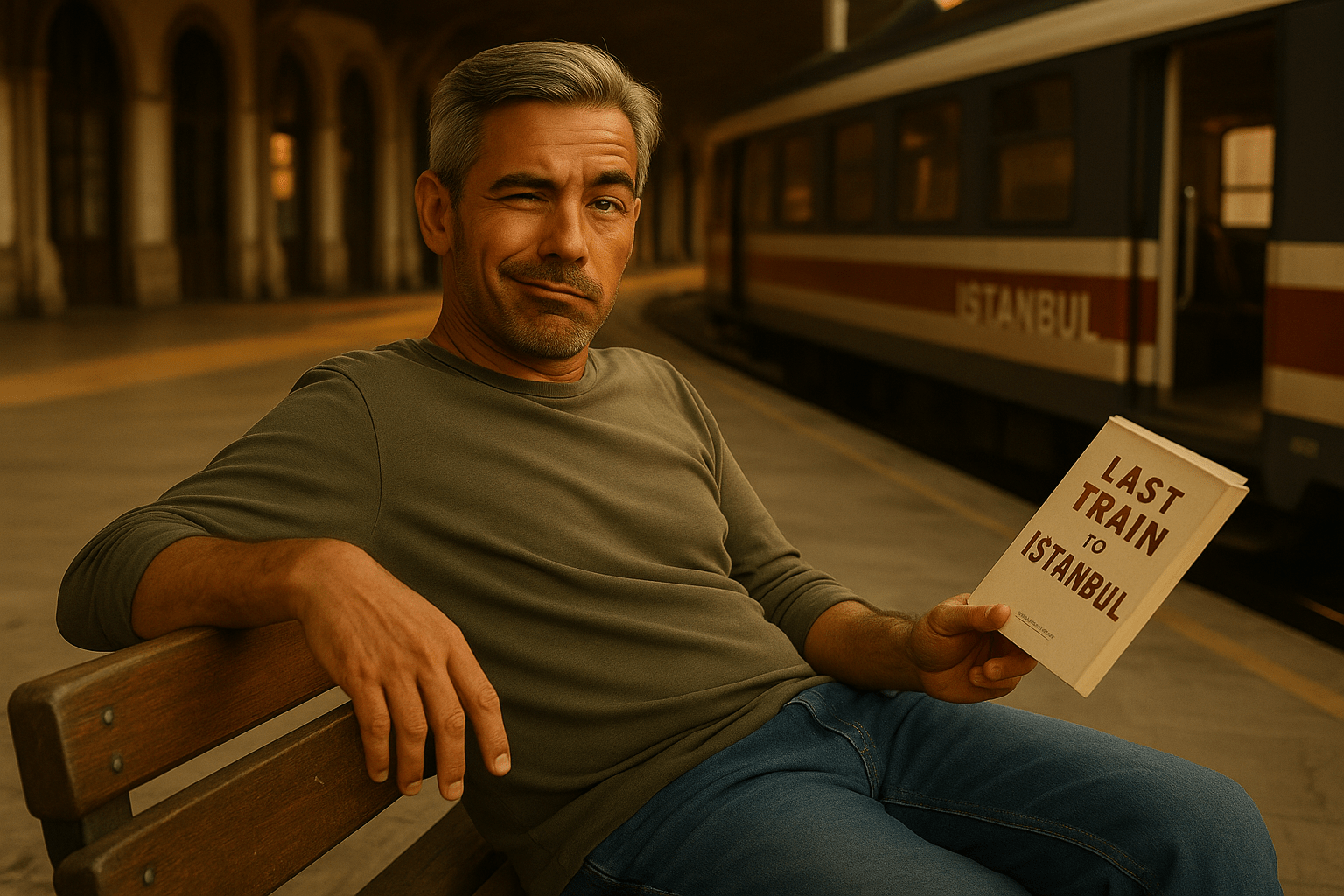
I wanted to love Last Train to Istanbul—really, I did. I poured myself a mug of herbal tea, grabbed a cozy blanket, and settled in with what I thought would be an emotional, gripping piece of historical fiction. But alas, by page 38, I’d mentally disembarked and was already reading the synopsis of another book.
The novel, originally published in Turkish and translated into English, seems to suffer from what I’ll politely call “translation awkwardness.” The writing feels stilted and tedious, like someone copy-pasted passages straight from a history textbook and forgot to add, you know, characters I care about.
Now, let me be clear: I adore well-researched historical fiction. I’m the first in line for novels that paint the past with emotional depth and journalistic accuracy. But there’s a delicate balance between enriching the reader and overwhelming them with minutiae. And in this case, the author seemed more interested in proving their research than telling a story. For example: was it really necessary to break down the specific number of bullets England agreed to provide? Unless you’re writing a weapons audit for the UN, that’s probably a detail best left implied.
Then there are the lines that made me do a double take. Take this gem:
No financial problems, but they were living hand-to-mouth.”
I’m sorry, what? That’s like saying, “We’re not hungry, just starving a little.” It might be attempting to say the characters weren’t in debt, but also weren’t thriving—just barely scraping by. If that’s the case, how about:
“They weren’t in debt or behind on bills, but every dollar they earned went right back out.”
See? Still depressing, but clearer.
And then we have this moment of eyebrow-raising modernity:
“Genes are genes. Selva has taken after my grandfather; Sabiha hasn’t. It is as simple as that and very little can be done about it.”
In the late 1930s, your average person on the street wouldn’t have been tossing around genetic theory like it was common parlance. Scientists knew about genes, sure—but the public? Not so much. So unless one of the characters had a side gig teaching high school biology before it was cool, this felt like a historical inaccuracy wearing a lab coat.
Look, I know I sound nitpicky. But it’s these little things—awkward phrasing, misaligned tone, and historically jarring references—that collectively pulled me out of the narrative. And when reading takes more effort than joy? That’s usually my cue to move on.
Would I recommend Last Train to Istanbul? Maybe—if you’re fascinated by Turkish history, don’t mind dry translation, and have a higher tolerance for info-dumps than I do. But for me? This particular train left the station without me.
Your turn—have you ever abandoned a book that everyone else seemed to love? Or do you power through to the bitter end? Drop a comment below, and if you like my no-nonsense, heart-and-sarcasm book musings, don’t forget to subscribe!

Discover more from Tate Basildon
Subscribe to get the latest posts sent to your email.
 Tate Basildon