
There are moments in life when you read something so ridiculous, so profoundly baffling, so aggressively nonsensical, your entire body just… stops. You blink. You stare. You question your own literacy. You wonder if maybe you hallucinated it, or perhaps you died five minutes ago and this is your onboarding into some highly disorganized afterlife.
This was me recently—me, sitting there, minding my own business, trying to gently wake up and not scare my lungs into rebellion—when Dear Prudence slapped me across the face with the worst advice I’ve seen outside of Facebook wellness groups.
Now, let me back up. I read Dear Prudence regularly, mostly for entertainment. It’s like watching emotional cooking shows: strangers hand over their raw ingredients (life), and the columnist tries to make a dish that won’t poison anyone. Sometimes it works. Sometimes it explodes. I’m not picky. I’m here for the spectacle.
I never thought deeply about who “Prudence” was. In my head, she had qualifications. Experience. A degree. A soft therapist voice. Maybe a cardigan. Certainly a clipboard. At the very least, a background in something other than telling strangers on the internet how to live.
Then came The Letter.
A woman—a caregiver—writes in. And if the universe has any justice left, caregivers get VIP seating in heaven, priority boarding, and the good snacks. This woman spends her day doing all the things that keep humanity functioning: feeding, bathing, supporting, lifting, comforting, and helping the people who need her most.
She is tired in the way only caregivers and chronically ill people understand—tired behind the eyes, tired in the bones, tired in the soul.
Her husband works from home. They make an agreement: he’ll handle dinner. Lovely. Fair. A partnership.
But the man cooks… mush.
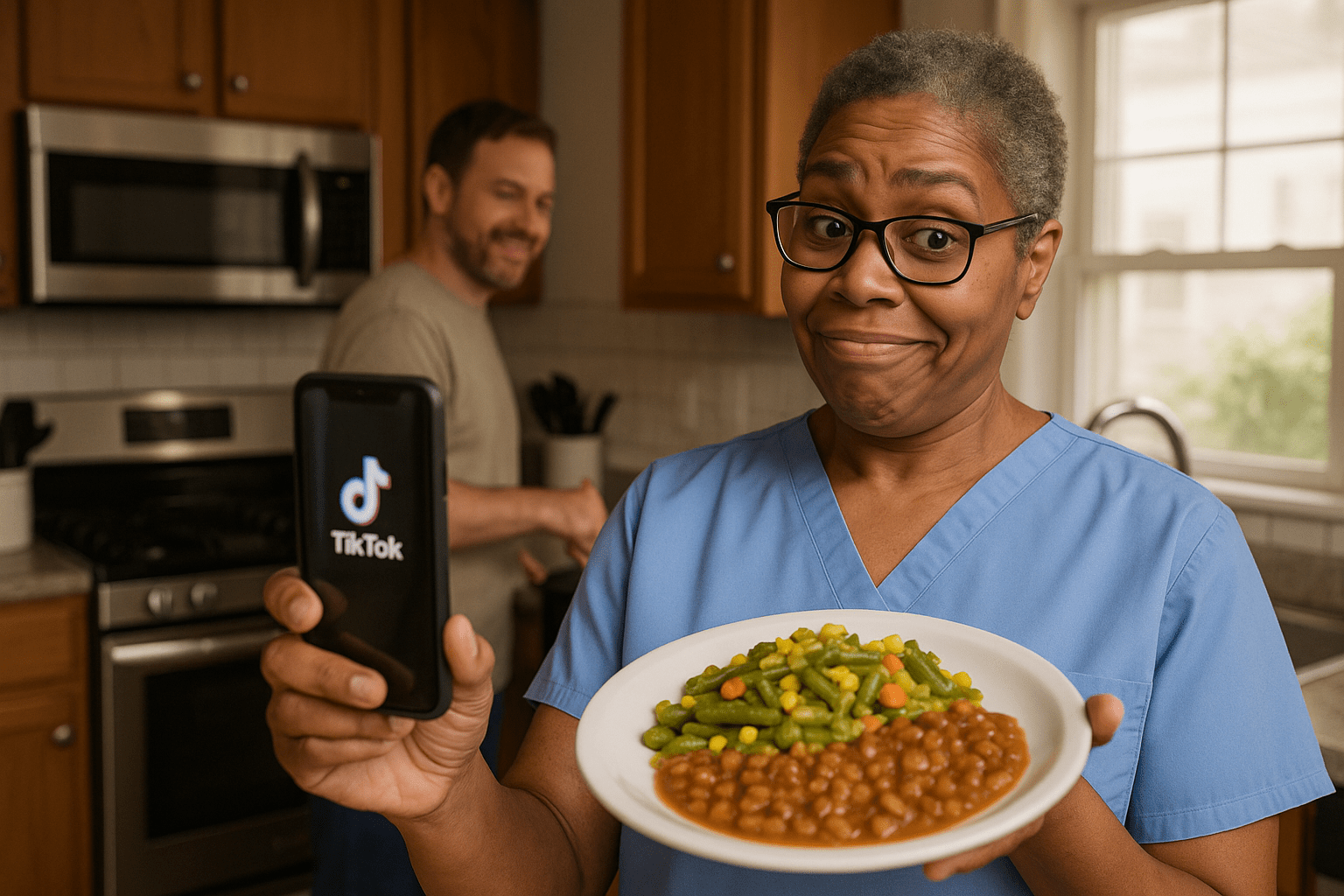
Not metaphorical mush. Not figurative mush. Literal mush. Frozen vegetables and canned beans simmered into a one-texture situation that should never be allowed near a dinner table. I’ve seen hospital food with more ambition.
Every night he presents his creation like it’s the tasting menu at The French Laundry, and every night she eats it because she’s too exhausted to start World War III over a can of beans.
She wants better food. She also doesn’t want to crush his confidence. A reasonable, nuanced dilemma.
So she writes to Dear Prudence.
Sweet reader, brace yourself, because what comes next is the emotional equivalent of slipping on a banana peel and face-planting into a bucket of wet cement.
Prudence recommends…
and I’m not making this up…
that the woman start a TikTok account.
A TIKTOK ACCOUNT.
Where she films the mush.
Posts it online.
And lets strangers humiliate her husband into improving.
I sat there, stunned. Paralyzed. My soul briefly left my body to go file a noise complaint. I reread it thinking maybe my oxygen concentrator had interfered with my comprehension.
But no.
TikTok.
As therapy.
Public shaming.
As communication.
The woman is exhausted, trying to save her marriage from bean-flavored despair, and this unlicensed stranger with too much confidence is like, “Have you considered cyberbullying? Works wonders.”
I nearly dropped my mug. And trust me, with my medical history, dropping anything breakable is already an extreme sport.
So I did what any rational, chronically ill private chef would do when confronted with this level of nonsense: I looked up Prudence’s qualifications.
I expected at least a counseling degree. Maybe a certificate. A workshop. Something.
But no.
She’s a journalist.
A journalist.
Let me emphasize: I’m not anti–journalist. I respect journalists. They uncover truth. They inform the public. They write the headlines I click on at 2 a.m. when I should be meditating.
But they are NOT mental health professionals.
Not therapists.
Not counselors.
Not psychologists.
Not licensed anything.
And here we are letting this person guide vulnerable people through emotional minefields involving marriage, burnout, and dinners that resemble punishment.
This is the part where I felt the familiar “are you kidding me?” twitch in my heart.
I have lived through the kind of diagnoses that make people whistle through their teeth and say, “Hoo boy.” I have handled real problems—oxygen alarms, medication side effects, the thrilling unpredictability of my own chest cavity. And yet THIS? This advice column? This was the thing that made me question the stability of the universe.
We have drifted into an era where untrained internet personalities are treated like emotional sherpas. A person posts one viral take and suddenly they’re the Digital Dalai Lama. People flock to them. People trust them. People pour their vulnerabilities into inboxes monitored by interns.
And here’s the problem:
Good writing ≠ emotional expertise.
Confidence ≠ qualifications.
Snappy one-liners ≠ healthy advice.
Especially not advice that involves filming your spouse’s worst culinary moment and feeding it to the wolves of TikTok.
And trust me, as someone who cooks for a living—TikTok would eviscerate that poor man.
Public humiliation isn’t communication.
It’s cruelty dressed up as content.
This poor woman was reaching out because she didn’t want to be mean. Because she wanted to handle the situation with grace. And Prudence’s solution is basically, “Have you tried throwing him into the internet coliseum? Maybe the crowd will teach him seasoning.”
I swear, my lungs made a noise.
Here’s what someone with actual experience—either with caregiving, chronic illness, or healthy communication—would say:
“Talk to him.”
Just talk. Not perform. Not post. Not go viral.
A simple:
“Honey, I appreciate you cooking. Truly. But this mush is becoming a character in our marriage, and I’m afraid it’s winning.”
Communication. Revolutionary stuff.
Yet instead of guiding her toward actual intimacy, Prudence hands her a strategy that belongs in a sitcom, not a home.
This whole ordeal reminded me how many bad-advice-givers exist in the wild. I’ve gotten plenty myself:
“Have you tried breathing better?”
(Yes. Shocking, but I have considered this.)
“You just need to think positively!”
(My heart failure says hi.)
“Turmeric cures everything.”
(The turmeric warriors stay ready.)
“Just relax.”
(Oh good, thank you. I’ll tell my sarcoidosis.)
The internet loves handing out advice like free samples at Costco—whether you want it or not, whether it helps or not, whether it’s safe or not.
And too often, exhausted people—people like this caregiver, people like me—end up absorbing it simply because they’re worn down and hoping to feel less alone.
But this is where I draw the line:
No unlicensed advice columnist should be encouraging marital TikTok warfare.
If your partner cooks mush nightly?
You deserve better.
You deserve nutrition.
You deserve texture.
You deserve to chew.
But you also deserve a solution rooted in kindness, not humiliation.
So please, for your mental health and your taste buds, talk to someone qualified if you need guidance—someone trained, someone ethical, someone who won’t say, “Have you tried going viral?”
And now I’m curious:
Has anyone ever given you advice so terrible, so absurd, so forehead-crumplingly bad you remember it years later?
Tell me in the comments.
Let’s bond over terrible guidance.
Or, if you want more of these rants, musings, and chef-with-heart-failure moments, hit subscribe and come along.
I promise no mush, no TikTok therapy, and no advice that makes you question your sanity before breakfast.

Discover more from Tate Basildon
Subscribe to get the latest posts sent to your email.
 Tate Basildon