

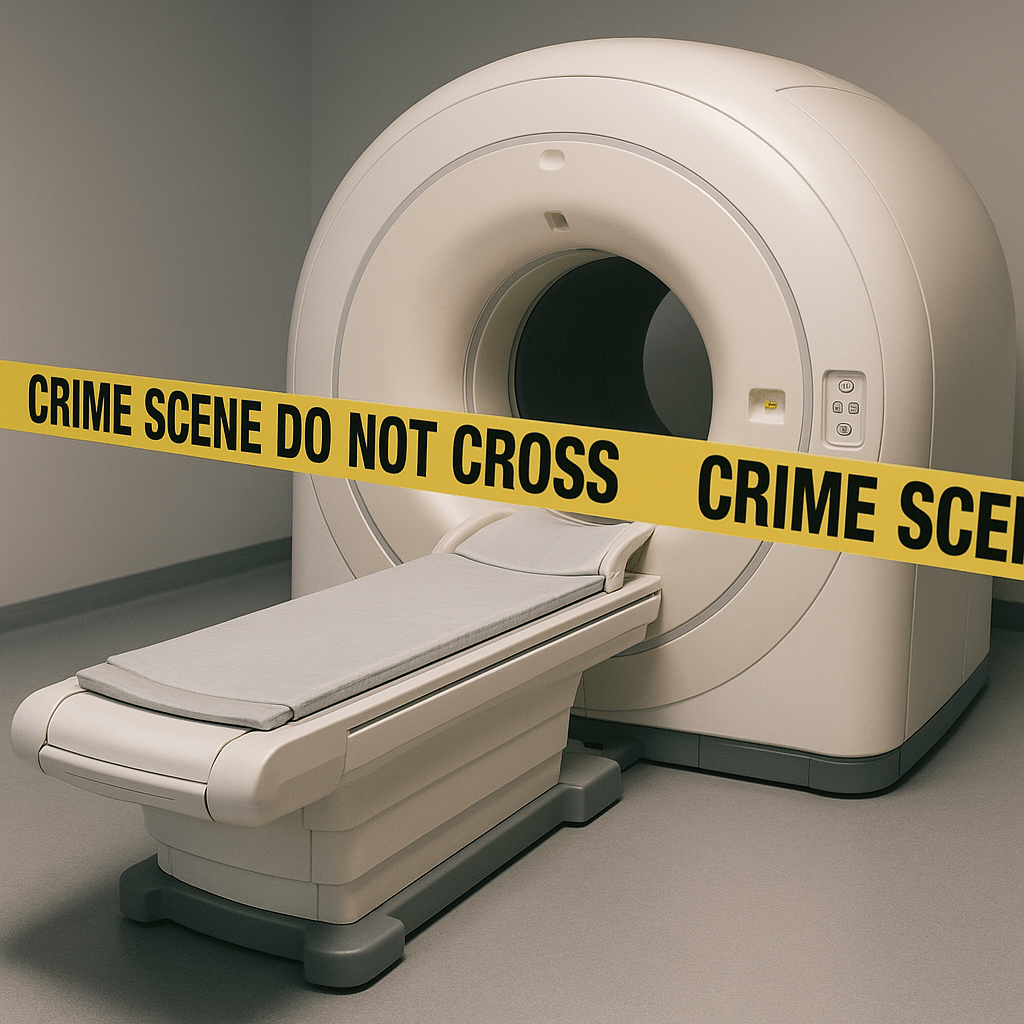
When I read about the man in Westbury who was pulled into an MRI machine and died from his injuries, I couldn’t help but freeze mid-sip of my latte. As a private chef who’s made it through both culinary school and a pile of medical crises that could fill a memoir (spoiler: they do), stories like this don’t just horrify me—they crawl into my skin and set up camp.
The man, 61, walked into an MRI room still wearing a metal chain, and the machine—doing what a 1.5 Tesla magnet does best—dragged him in like a human missile. He was reportedly there visiting someone who was undergoing the scan. Maybe it was his wife, child, friend. Maybe he heard them cry out. Maybe he was just trying to help. But just like that, tragedy. He died the next day from his injuries.
As someone who’s been on more MRI tables than I can count (bonus points if I had to fast beforehand), this story turned my stomach. MRIs are like sacred temples for people like me—diagnostic, terrifying, claustrophobic temples. They are also not places you casually wander into wearing metal. We get the speech every time: no jewelry, no underwire, no wallets, no implants unless they’re approved. And still… this happened. Which begs the question—what protocols failed, and why did no one stop him?
I’ve got an implanted defibrillator buried in my chest, a fancy souvenir from my heart failure (circa the sarcoidosis chapter of this life’s chaos novel). When I roll up to an MRI, the radiology techs go full Secret Service mode. They verify, reverify, sometimes call my cardiologist just to make sure I won’t combust mid-scan. It’s a process, and it should be. The fact that someone, even as a visitor, was allowed into that room wearing a “large metal chain” is not just negligence—it’s betrayal. Of him, of his family, of the patient inside that machine who now has to live with that memory burned into their brain like a bad dream.
The emotional shrapnel from an event like this is not something hospitals scan for. It’s certainly not something that gets noted in your patient file. But the damage it leaves? Oh, it’s there. I keep thinking about the poor person who was in the MRI during this. The trauma. The survivor’s guilt. The horrifying moment when a loved one tried to help—and died because a magnet doesn’t care about intention.
Being a chronic illness patient means constantly assessing risk. You weigh things like “Will this med ruin my kidneys?” against “Do I want to be able to breathe today?” But now I have to add, “Will someone get sucked into my MRI room and die?” I’m not ready for that as a person who has to look forward to an MRI every six months to monitor my Acoustic Neuroma (brain tumor)
And as a novelist still working on publishing my debut, let me say this: real life writes better horror than I ever could. Fiction, for all its twists and turns, can’t always compete with the cruel absurdity of truth. I’d never have thought to write a scene this extreme. I’d edit it down. Make it more believable.
But here we are.
This kind of story doesn’t just shake me as a patient—it shakes me as someone whose job is to prepare and nourish others. As a chef, I obsess over safety. Temperatures, contaminants, allergens—I’m wired to protect. Yet somehow, in a medical setting where protection is the whole point, someone dropped the ball. And a man is dead.
It’s a reminder that chronic illness warriors like us—whether we’re penning stories, plating meals, or trying to hold our bodies together with medication and prayer—have to stay so aware. Hypervigilance is exhausting, but sometimes it’s all we have. Because when the world isn’t watching, we need to.
So if you’re heading to an MRI, or someone you love is, speak up. Ask about safety zones. Confirm protocols. Be “that person” who asks too many questions. And if you’re like me—someone who’s dodged more medical bullets than seems fair—trust your gut when it tells you something feels off.
This story broke my heart. Not just because of the man who died, but because it so easily could’ve been anyone. Someone like me. Someone like you.
Your Turn
How are you holding up after reading that? Ever had a close call in a medical setting? Share it in the comments. Let’s talk about it—especially if you’re a fellow spoonie, creative, or someone trying to live life fully while navigating the landmines of chronic illness. And if this post hit you in the gut the way it did me, go ahead and subscribe. I promise I write about lighter stuff too… like the time I tried to bake gluten-free croissants during a prednisone flare. Riveting stuff.
Discover more from Tate Basildon
Subscribe to get the latest posts sent to your email.
 Tate Basildon