
There was a time—an earnest, slightly desperate time—when Grammarly and I were basically attached at the hip. I’m talking inseparable. Ride or die. The kind of relationship where you don’t even question it anymore; you just assume it’s forever. My spelling was questionable at best, my commas wandered off like unsupervised toddlers, and my brain—already juggling chronic illness, medications, fatigue, and the general absurdity of being alive—did not always feel like cooperating. Grammarly showed up like a well-meaning, slightly smug friend and said, “Don’t worry, I’ve got this.” And for a while, it really did.
I’m a chef by trade, a writer by stubborn insistence, and someone living with sarcoidosis and heart failure who spends a lot of time negotiating with his own body. Some days my hands are steady and my thoughts flow. Other days, my brain feels like it’s wading through molasses while wearing ankle weights. On those days, tools matter. Anything that can help me get words from my head onto the page without turning it into an endurance sport feels like a gift. Grammarly was that gift. At first.
It cleaned up my sentences. It caught the typos my eyes slid right over. It gently nudged my grammar back into something resembling order. It made me look far more put-together on the page than I sometimes felt in real life. And honestly? I was grateful. I sang its praises. I recommended it to other writers, especially those of us dealing with chronic illness who already have limited energy to spend. Why waste precious spoons hunting down rogue apostrophes when software can do it for you?
Then Grammarly decided it wanted to be more than an editor.
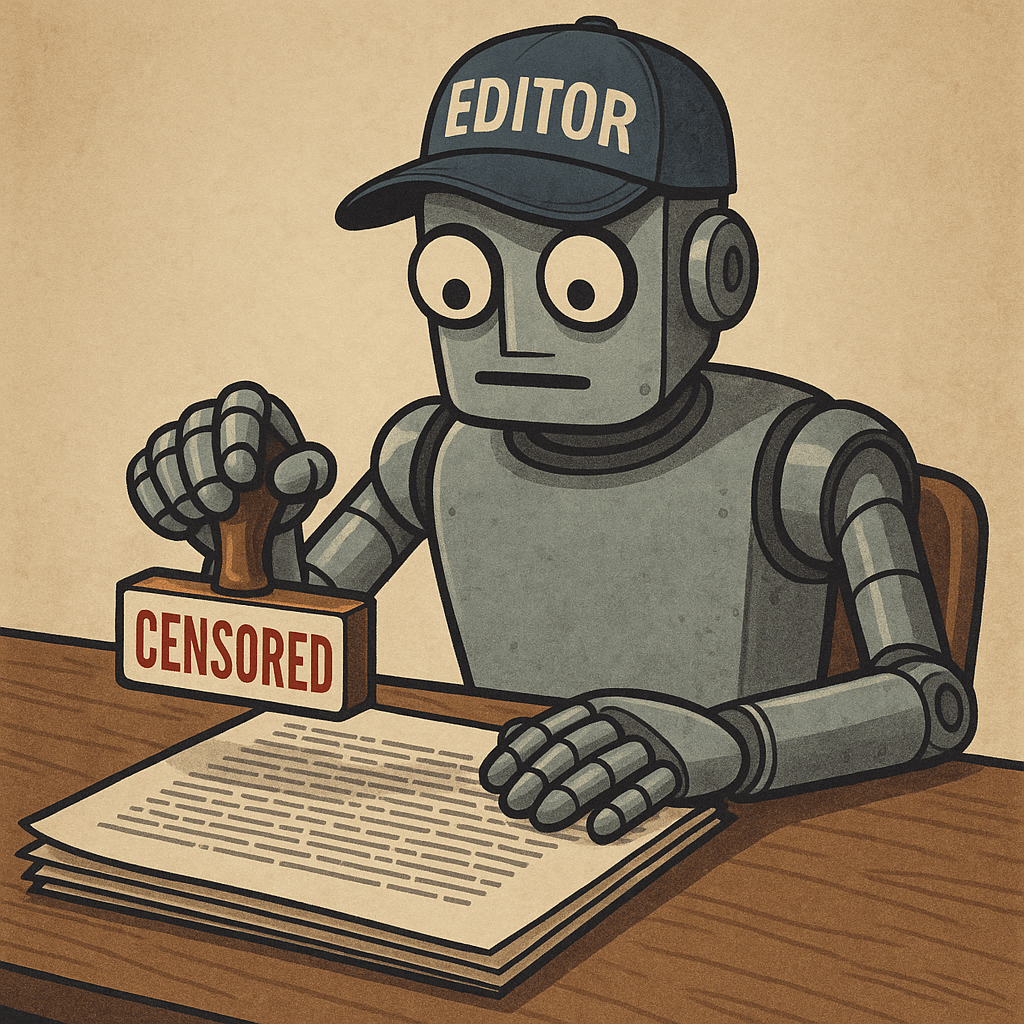
Somewhere along the way—around the time everything decided to call itself “AI-powered”—our relationship changed. Grammarly stopped being the helpful assistant who fixed my spelling and started acting like it was in charge of my moral development. Suddenly, it wasn’t just correcting my grammar. It was judging my content. Flagging my words. Refusing to engage with parts of my writing because they were, apparently, too “sensitive.”
Let me be clear: I did not sign up for a conscience. I did not ask for a digital lecture. And I definitely did not pay for a service that would look at my lived experience and say, “Hmm, no, that makes me uncomfortable.”
Here’s the moment where I realized this was not going to work.
I’m writing a memoir. A real one. Not the shiny, sanitized kind where everyone behaves nicely and learns a lesson by page three. The kind where people are complicated, relationships are messy, and life refuses to stay neatly inside polite lines. One section involves a job I had working for an elderly gay gentleman and his much-younger partner. It’s part of my life. It happened. It shaped me. And like most real-life situations, it wasn’t a Hallmark card.
There was affection there. There was humor. There was irritation. There was drama. There were raised voices, sharp words, and moments that made me want to bang my head against a marble countertop. In other words, there was honesty. Nothing in that section is anti-gay. If anything, it’s deeply human. The frustration wasn’t about sexuality; it was about being stuck between two adults who treated me like an unwilling referee in their ongoing relationship Olympics.
Grammarly disagreed.
It refused to edit certain passages. Not because the grammar was wrong. Not because my punctuation had gone feral again. But because it detected “sensitive content.” The presence of a gay couple, described as actual people with flaws and tempers and personalities, was apparently too much. The language—language that reflected how people actually speak when they’re upset—triggered some internal alarm. And just like that, my editor became a gatekeeper.
I asked it to fix spelling errors. It responded by clutching its digital pearls.
That’s when I felt something shift from irritation to anger. Not explosive anger—more the slow, simmering kind that tells you a boundary has been crossed. Because here’s the thing: writers do not exist to make software comfortable. Especially writers telling stories rooted in lived experience. Especially those of us navigating chronic illness, disability, and bodies that already get policed enough by doctors, insurance companies, and well-meaning strangers.
Living with sarcoidosis has taught me many things, but one of the biggest is this: if you don’t advocate for your own voice, someone—or something—will happily soften it for you. There is already so much pressure to make our stories easier to digest. To make pain inspirational. To sand down the rough edges so other people don’t have to feel uncomfortable. I am not interested in doing that for an algorithm.
Free expression isn’t just some abstract principle for me. It’s survival. Writing is how I process the fear, the anger, the grief, and the dark humor that comes with living in a body that doesn’t always cooperate. It’s how I make sense of a world that loves tidy narratives and has very little patience for ongoing illness. When a tool decides it knows better than I do what’s acceptable to say about my own life, that’s not help. That’s interference.
I know someone will say, “It’s just software. Don’t take it personally.” But when you’re a writer, it is personal. Your words are the work. Your voice is the point. And when a tool starts nudging you toward something safer, blander, or more palatable, it’s not neutral. It shapes the final product, whether you want it to or not.
I don’t want my writing pre-chewed. I don’t want it sanitized into something that offends no one and says nothing. I want it to sound like me: a chef with a sharp tongue, a chronic illness patient with a complicated relationship to his own body, a husband, a pet parent, and a man who has lived long enough to know that real stories are rarely tidy.
So I broke up with Grammarly.
No dramatic speech. No long goodbye. I simply stopped using it. I found other tools that do what I actually need them to do: fix typos, catch obvious mistakes, and then get out of the way. Because that’s the job. Not to rewrite my intent. Not to judge my experiences. Not to decide which parts of my life story are allowed to exist.
This isn’t a declaration of war on technology. I’m not anti-tools. I’m anti-anything that tries to replace human judgment, nuance, and lived reality with a checklist of what’s considered acceptable. Especially when those checklists are built without people like us in mind—people living with chronic illness, telling stories that don’t fit neatly into inspirational boxes.
Writing with sarcoidosis means working around fatigue, brain fog, pain, and the constant background noise of medical reality. It means choosing carefully where to spend energy. And I refuse to spend mine arguing with an algorithm about whether my life is appropriate enough to be edited.
If my words make a few circuits uncomfortable, that’s fine. My job isn’t to make software feel safe. My job is to tell the truth as clearly and honestly as I can, in a voice that still sounds like mine at the end of the day.
And honestly? Breaking up with Grammarly felt like reclaiming a little piece of myself. One less filter. One less voice in the room telling me to soften, smooth, or reconsider. Just me, the page, and whatever messiness needs to come out.
That’s the relationship I’m committed to now.
If you’re a writer—especially one living with chronic illness—have you ever felt pressured to soften your voice or censor your own experiences? I’d love to hear about it. Share your thoughts in the comments, or subscribe so you don’t miss future posts where I continue muttering thoughtfully at life, writing, and everything in between.

Discover more from Tate Basildon
Subscribe to get the latest posts sent to your email.
 Tate Basildon