


I started using supplemental oxygen in 2007, back when “portable” meant lugging around a giant green metal tank affectionately called a “wine bottle.” Cute name, not so cute in practice. Heavy, clunky, and only good for about an hour of oxygen. Imagine me—an avid hiker and explorer—strapped to a a bottle the weight of a bowling ball on my back. Yeah, that didn’t last. I skipped portable oxygen for years because honestly, it wasn’t portable at all.
Then came liquid oxygen tanks. Lighter, yes. Reliable? Not really. They evaporated if you didn’t use them right away. So picture this: I’d fill it up for a long drive and hike, and by the time I was halfway through my adventure, the thing was hissing its life away into thin air. Still, I used it more often because at least I wasn’t dragging around an anchor.
But what I hated most was the delivery system. Not the oxygen—the actual people. The company was always late. The drivers would roll these filthy tanks into my foyer, and I’d spend precious energy (the kind I don’t exactly have in abundance) disinfecting them with wipes. They never felt clean enough. Breathing is supposed to make you feel alive, not contaminated.
And then came Inogen. Cue the angels singing. Finally, a company making lightweight portable oxygen concentrators with rechargeable, swappable batteries. Even better, they could recharge in the car. For the first time, I could head out on a hike and not worry about the ticking clock of a disappearing oxygen supply. Over time, Inogen kept improving their devices—longer-lasting batteries, smaller units, and reliable service. I’ve owned four of their portable concentrators, and honestly? I loved them all. Their customer service has also been excellent, which in the medical world is rarer than a doctor who runs on time.
But here’s the kicker: the price.
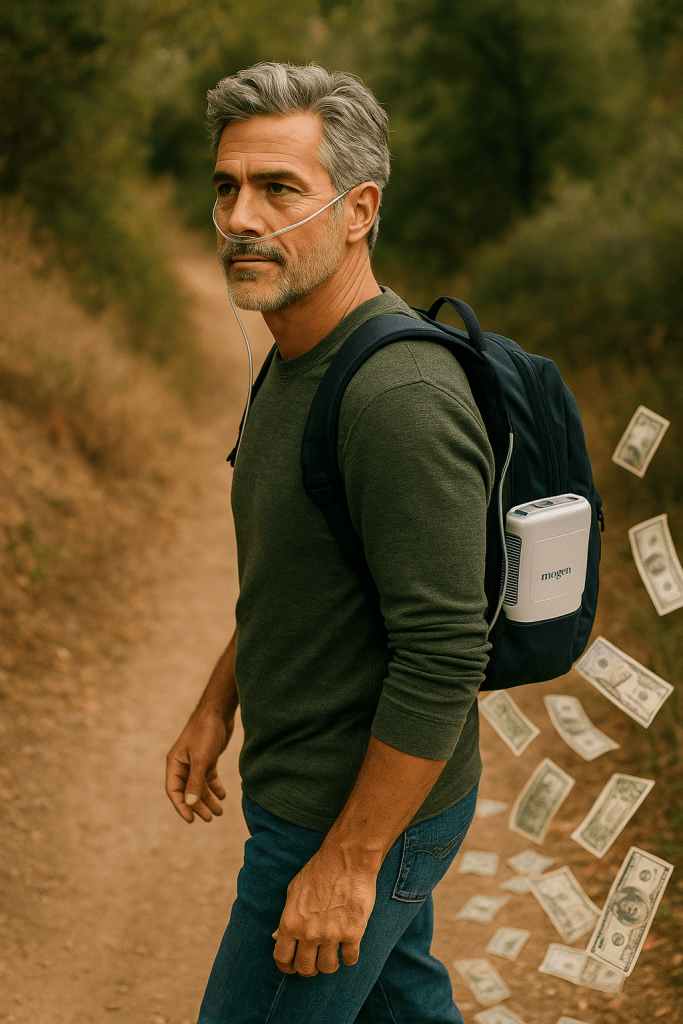
Even though I’ve been fortunate enough to buy my own units, these things are expensive. My current one, the Rove 6, will run all day, but if you need a second battery (and trust me, you do), you’re dropping more than $600. Want to charge both batteries at the same time? Congratulations, you now also need their special external charger—for another $300+.
Come on. This is where it feels like Inogen is kicking people while they’re already down. Oxygen is not a luxury—it’s survival. Yet insurance rarely covers these devices, leaving patients to figure out how to fund their ability to breathe.
Naturally, I got curious about what these batteries and chargers actually cost to make. Spoiler: it’s nowhere near what they’re charging.
Inogen doesn’t reveal their exact manufacturing costs, but based on industry data, here’s the reality:
A standard Rove 6 battery likely costs them about $125–$230 to produce. The extended/double battery? Around $220–$400. The external charger? Roughly $40–$85.
Meanwhile, retail prices are $600+ for the battery and $342 for the charger. In plain English: patients are paying hundreds more than production costs. Sure, some of that markup covers warranties, support, and regulations. But the profit margins? Let’s just say they’re breathing a little easier than their customers.
The Bottom Line
I’m grateful for the independence these devices give me. I wouldn’t trade that freedom to hike, travel, and live outside my living room walls. But the cost barrier is real. Too many people are stuck without access to this technology because of price gouging hidden behind “medical equipment” labels.
Breathing is not a luxury item. It’s survival.
So here’s my call to action: if you or someone you love is navigating life with oxygen, speak up. Share your stories, advocate for fair pricing, and demand insurance companies cover these devices. The more noise we make, the harder it is for companies to justify charging patients luxury-car prices just to breathe.
And if you’ve had your own oxygen saga—whether with Inogen, liquid tanks, or those charming wine bottles—I’d love to hear it in the comments. Let’s compare notes. After all, the best thing about breathing is not doing it alone.
Discover more from Tate Basildon
Subscribe to get the latest posts sent to your email.
 Tate Basildon