
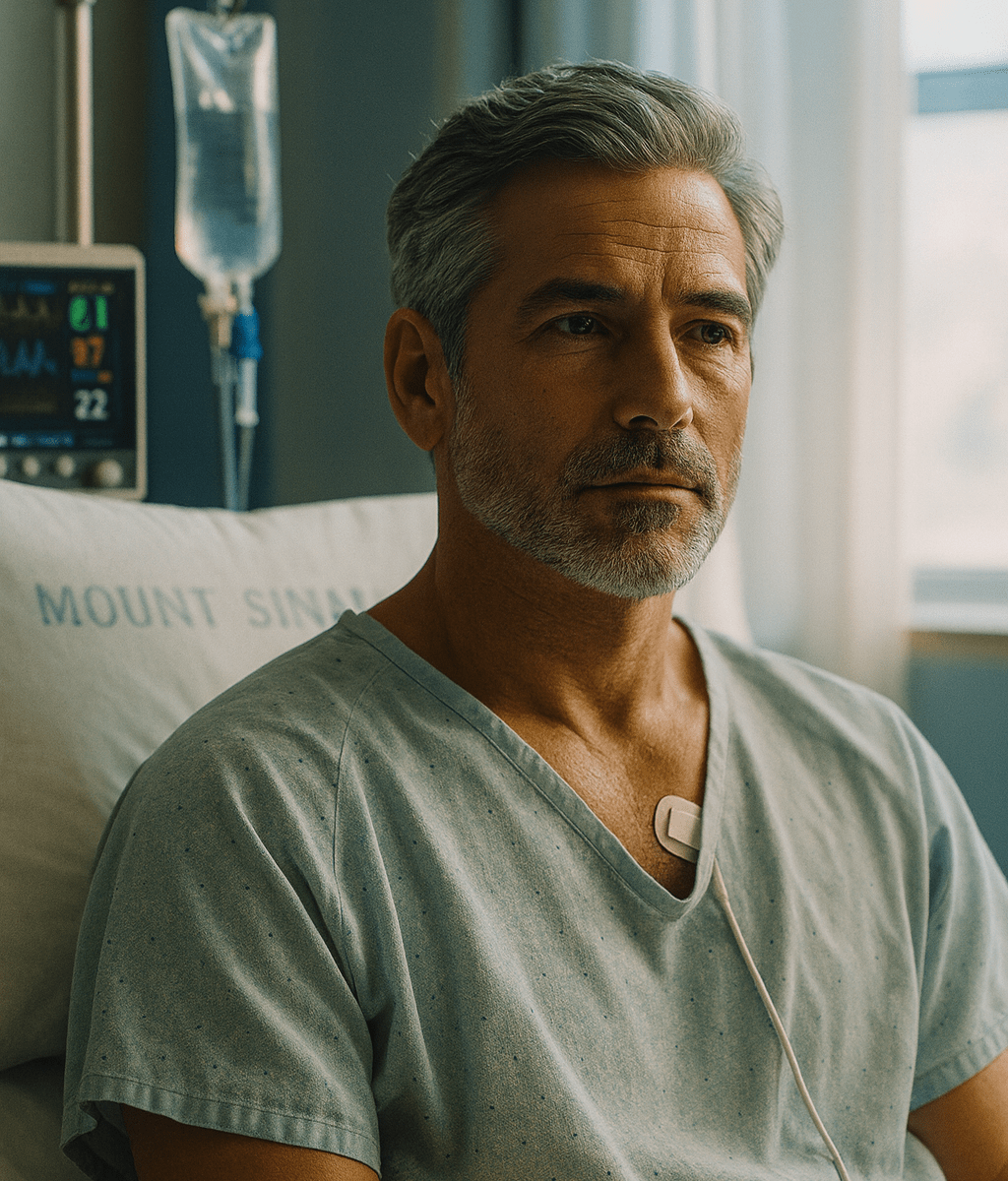
We all have that one moment when life throws a curveball so wild it knocks the wind out of you—and then changes everything. Mine came in 2007, flat on my back at Mt. Sinai in New York, blinking awake after what was supposed to be a simple procedure to close a hole in my heart.
The surgeon stood over me as I surfaced from anesthesia and told me the hole was fixed—but there was a problem. My heart was in failure. I was too dazed to understand what that meant, and it didn’t feel real yet. The life-changing part came a few hours later.
A cardiologist appeared and told me, with unnerving calm, that based on everything he saw, I’d need a heart transplant in about five years. Translation: five years to live, unless I got a new heart. I remember thinking, Well, that escalated quickly.
Before I could even process that, another doctor arrived. Perfectly pressed suit, clipboard in hand. He was an electrophysiologist, which sounded futuristic and terrifying. He said I needed something called an AICD—a device that would sit in my chest and shock my heart if it ever decided to quit. Apparently, I was about to become part machine. Great.
That was the real moment my life changed—not just because my heart was failing, but because I was getting a new, uninvited roommate inside my chest. It would monitor me 24/7 and zap me back to life if necessary. Romantic, right?
It took me a year to get over the fear of that thing going off. Every time my heart raced, I panicked. Was it happening? Would I be shocked? Thankfully, it’s been eighteen years since that first implant and not once has it fired. I’m now on my third defibrillator, a regular part of my chest décor. The anxiety eventually faded, but the awareness never left.
You never really forget it’s there. I can feel it—just under my skin, pressing against the chest wall. The spot where the wires snake into the vein is so tender that the lightest touch can send me reeling. A pet pawing at my chest? Instant pain. I’ve learned to protect that area like national treasure. I sit strategically in public—never on the right side of an aisle, always shielding my left like I’m perpetually mid-pledge of allegiance.
Massage tables require creative pillow engineering. Sleeping on my stomach? Not happening. Even cuddling with my pets is a risk-reward negotiation. And amusement parks? Forget it. I once had to skip a desert safari because the rough ride could trick my device into thinking my heart was racing and try to “help” me.
Eighteen years and three devices later, I’ve learned to live with this tiny mechanical lifeguard in my chest. It’s still there, patient and ready, waiting to shock me back to life if I ever cross that invisible line between alive and not. That’s both comforting and a little unnerving.
People think surviving heart failure means you’re fixed, like a car after a tune-up. But the truth is, survival is ongoing. It’s managing fear, pain, tenderness, and gratitude—all at once. It’s learning to live in a body that reminds you every day just how fragile and miraculous life really is.
So yeah, my heart’s not what it used to be. But it’s still mine. And against all odds, it’s still beating.
If you’ve ever lived with a chronic illness, medical device, or diagnosis that changed your life overnight, I’d love to hear your story. Drop a comment below or subscribe to follow along—I promise, we’ll navigate this wild ride together, one heartbeat at a time.

Discover more from Tate Basildon
Subscribe to get the latest posts sent to your email.
 Tate Basildon