
My parents divorced when I was four, which, in the grand lottery of childhood chaos, was probably too young to understand the whole “love doesn’t live here anymore” concept. My mother remarried a year later, proving that hope—or maybe sheer optimism—runs deep in her veins. My biological father, the executive-turned-alcoholic, was supposed to pick my brothers and me up on Wednesdays and weekends. Supposed to. There’s a particular kind of heartbreak in waiting on a porch for someone who never shows up, especially when you’re a kid still wearing your best “Dad’s-coming-today” smile. Eventually, we stopped waiting. Kids learn patterns faster than adults do, and his pattern was absence.
Then came my second father—the one who actually deserved the title. A World War II vet, wound tight as a drum, but with a heart that worked overtime. My eldest brother rebelled against him, my other brother stayed neutral, but me? I just adored him. He was “Dad.” He was the one who came to get me when I got sick at school, the one who could make me laugh until I couldn’t breathe. His humor was weird, borderline absurd at times, but it matched my soul perfectly. If sarcasm is an inherited trait, I got it straight from him, and it’s the reason I’ve survived both life and my own body trying to evict me.
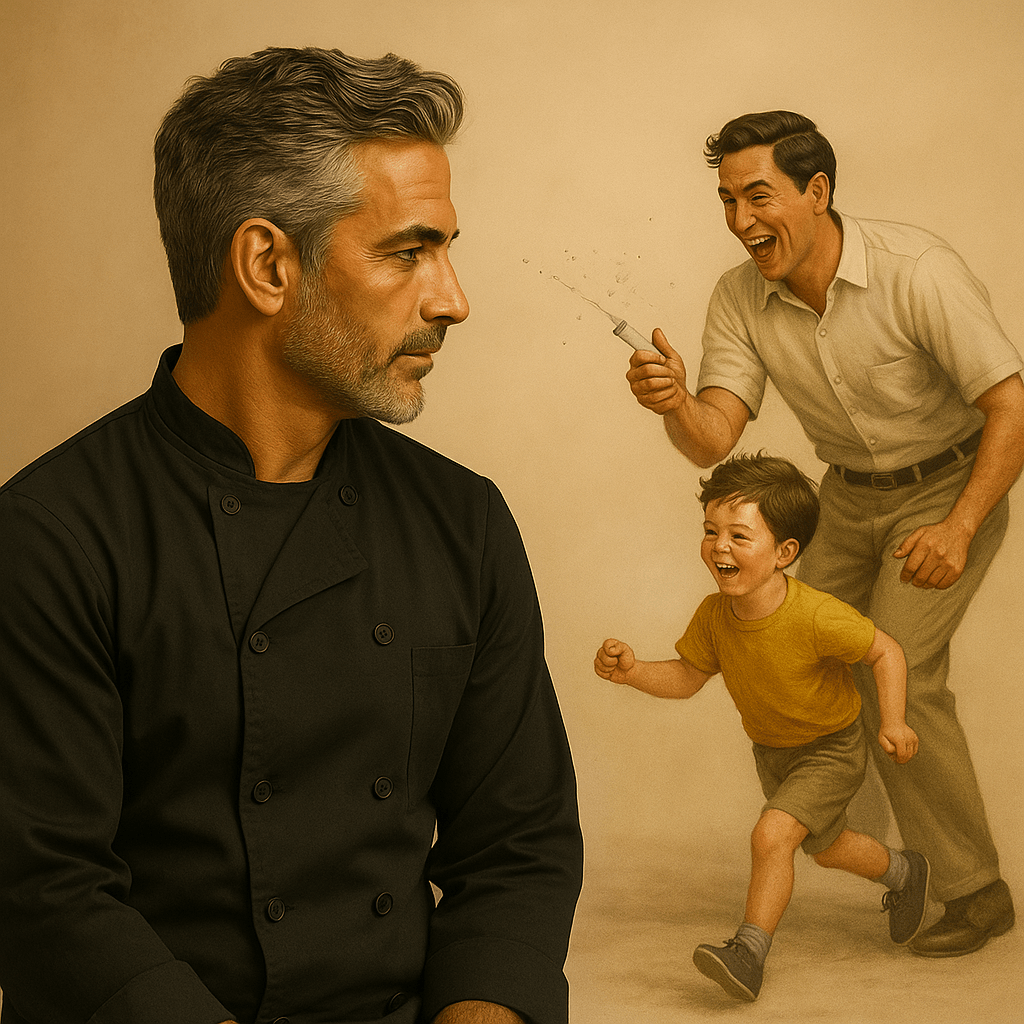
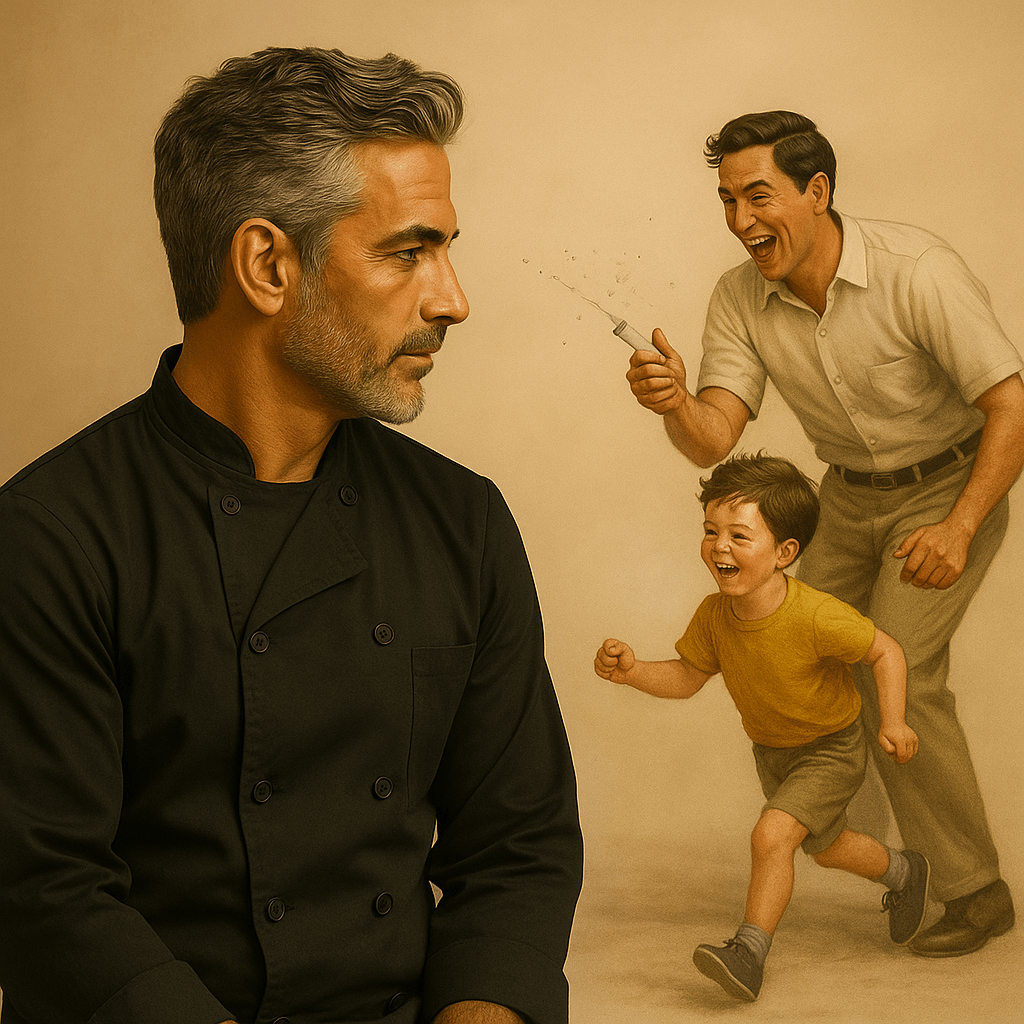
He had type one diabetes and injected insulin every day without a word of complaint. While most adults would’ve turned that into a tragedy, he turned it into a game. After his injection, he’d throw the needle, wash the syringe out, fill them with water, and chase me around the house in what I can only describe as a questionable bonding activity. Those water-fight “injections” taught me more about resilience than any motivational book ever could. Humor was his medicine long before it became mine.
When I was thirteen, he died. And for years, I disappeared with him. The silence that followed was heavy, like the air before a storm. I didn’t resurface until I was eighteen, and even then, grief had changed me—rearranged the furniture of my soul, if you will. Years later, when my biological father died, I felt… nothing. No tears, no anger, just indifference. You can’t lose someone who was never really there to begin with.
But Dad—my real dad—he’s the reason I can face heart failure with a smirk. The reason I can talk about needing a transplant and still joke about my current heart “running on eco mode.” My brother, when he got diagnosed with something serious, decided his life was over. I get it, but I can’t live like that. I’ve got a heart that’s still kicking, even if it’s more of a tired shuffle than a sprint. My dad showed me that pain doesn’t have to define you unless you hand it the pen.
He never complained, not once. He lived loud, laughed louder, and refused to let his disease make him small. That’s the example I carry with me every day, through every doctor’s visit, every medication tweak, every sleepless night when my chest feels like it’s hosting a drumline. He’s still with me when I crack a joke instead of breaking down. He’s the quiet strength in my sarcasm, the unspoken gratitude under my frustration.
I never told him I loved him when he was alive, mostly because we weren’t that kind of family. But I think he knew. Love doesn’t always sound like “I love you.” Sometimes it sounds like laughter echoing down a hallway, or a man showing up when you’re sick and scared. Sometimes it’s just knowing you’re safe because someone cared enough to stay.
So, thanks, Dad. For showing up. For letting me be me. For teaching me that humor can hold you together when everything else falls apart. I miss you in every sarcastic comment and every too-loud laugh that makes my wife roll her eyes. You taught me to find joy in the absurd, courage in the mess, and peace in just being.
If he could hear me now, I think he’d laugh and say, “You’re still writing too much, kid.” Maybe so—but some stories deserve the space.
So …
If you’ve ever had someone who shaped who you are just by showing up—especially when life got messy—drop a comment below. And if this story resonated with you, hit subscribe so you don’t miss the next one. We’re all just trying to find the humor in the heartache, one post at a time.
Discover more from Tate Basildon
Subscribe to get the latest posts sent to your email.
 Tate Basildon