


When I was thirteen, my step-father died right in front of me from a massive heart attack right after we had an argument. He was only 54. That sort of trauma doesn’t just sting; it moves in, rearranges your furniture, and whispers “your fault” when the lights go out. And because this was the 70s—when therapy was something whispered about like scandal—I was basically handed silence and a pat on the back like, “Alright then, off you go.”
So I blamed myself, because that’s what kids do when the world shatters. The brain desperately tries to make chaos make sense. Psychologists call it counterfactual thinking: the endless “what if” loop that turns grief into a self-inflicted prison sentence. Research actually shows that this kind of self-blame intensifies grief, especially when you don’t have a safe place to process those feelings. And let’s just say Irish priests at an all-boys Catholic school were not my idea of “emotionally safe space.”
My rebellion wasn’t smoking behind the gym or joining a motorcycle gang. No, I rebelled by raising my hand and asking questions priests would’ve happily exorcised if they could. “Why does God care about collar buttons?” “Is purgatory basically spiritual time-out?” “If God knows everything, does that include my report card?” Eventually, I became the first boy thrown out of Religious Studies for asking too many questions. My award? Confusion and a hallway pass.
Then I discovered the magic of swearing. I used the word “fuck” like culinary seasoning—sprinkled generously and applied to every grammatical possibility. My classmates dubbed me CussTate. Not my proudest title, but hey, linguistic flexibility is a skill. What I didn’t know then was that cursing actually works as a pressure release. Research shows it can spike pain tolerance, reduce stress, and give emotional relief by activating—yes, science again—the limbic system. So technically, I was practicing emotional regulation. Fight me.
I had nowhere to put the panic, the fear, the heartbreak. I was surrounded by Irish priests who would sooner recommend repentance than reassurance. If I confessed how heavy the guilt felt, I was convinced someone would whip out holy water. So I cursed instead. It worked. Well… enough to keep me from imploding.
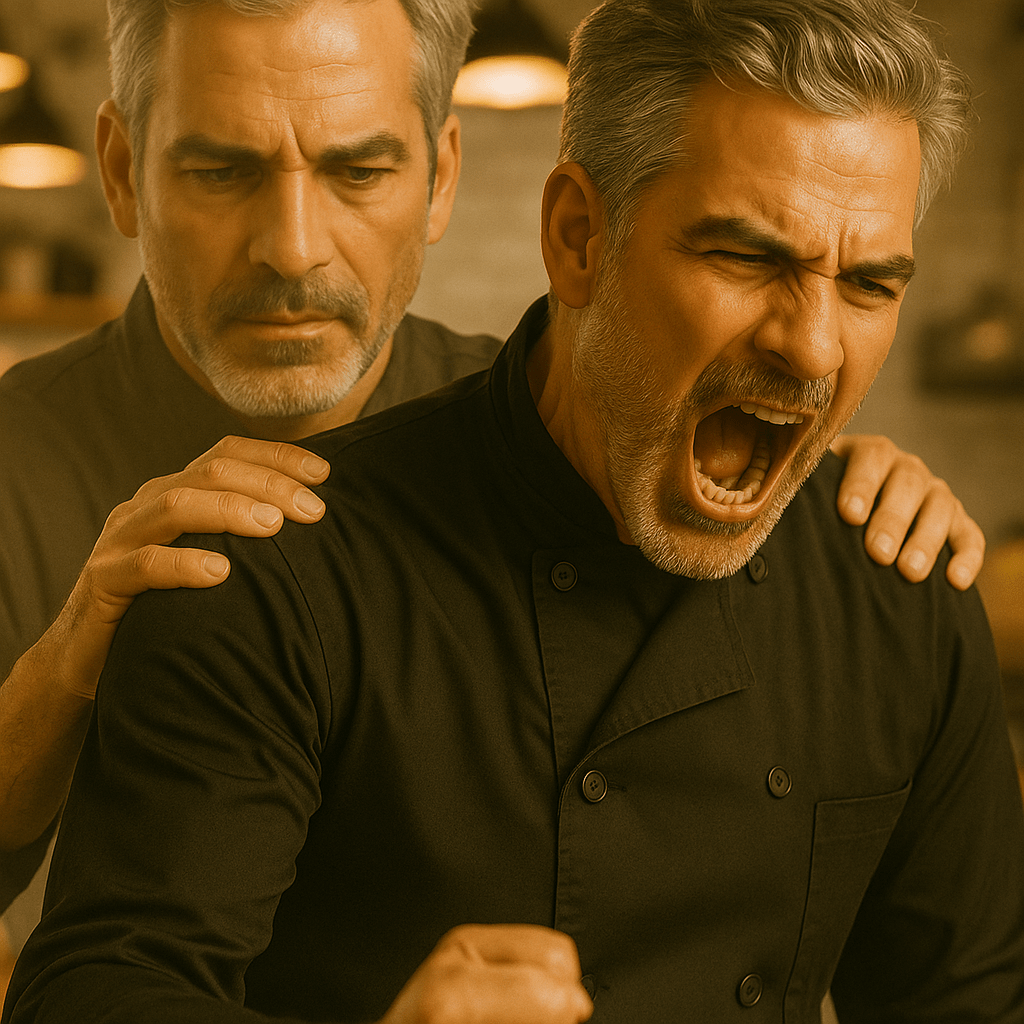
Two years later, I learned the truth: my step-father didn’t die because we argued. He had a known heart condition and tried pushing a stalled Harley up a hill to prove he was tougher than gravity. Macho pride did what I never could. When that reality finally sank in, the guilt eased. Not gone—but loosened, like the second button on a too-tight chef’s jacket.
Fast-forward through decades of sauté pans, pet kisses, marriage, manuscripts, and chronic illness plot twists. I’m a private chef, husband, pet parent, debut novelist, and someone whose heart has more backstory than a prestige TV drama—thanks, sarcoidosis and heart failure. Medical science now says chronic guilt and emotional suppression increase inflammation, cortisol, and cardiovascular risk. So yes, bottling guilt can literally punch your heart in the face.
But here’s the part I’m still learning: I don’t actually “talk it out.” I’m not the guy who opens up like a diary left in the rain. I keep a lot inside. Instead, I meditate. I breathe. I write. I cook. I walk. I let my dogs love me anyway. I’ve just found gentler ways to drain the pressure instead of detonating it.
And yes—I still curse. Not every sentence. Just when the moment earns the spice.
The thing that matters more than the Harley, the priests, the school halls, or the curse words is this: they helped me survive the chapters I wasn’t ready to read. Over time those words softened into storytelling, garlic sizzling at midnight, and characters who wrestle with the ghosts I once swallowed whole.
If you’ve ever blamed yourself for something wildly outside your control, hear this clearly: your guilt is lying. You are not the villain here. Stress and silence bruise the heart more than any F-bomb ever could. So meditate, walk, breathe, curse if you must, and most importantly—live the second act you deserve.
If any of this resonates, drop a comment. Share what you’ve carried. Or subscribe to follow along. Chronic illness, writing, healing, heartbreak, and occasionally seasoning sentences with profanity—there’s room at my table. Pull up a chair. You’re safe here.
Discover more from Tate Basildon
Subscribe to get the latest posts sent to your email.
 Tate Basildon