

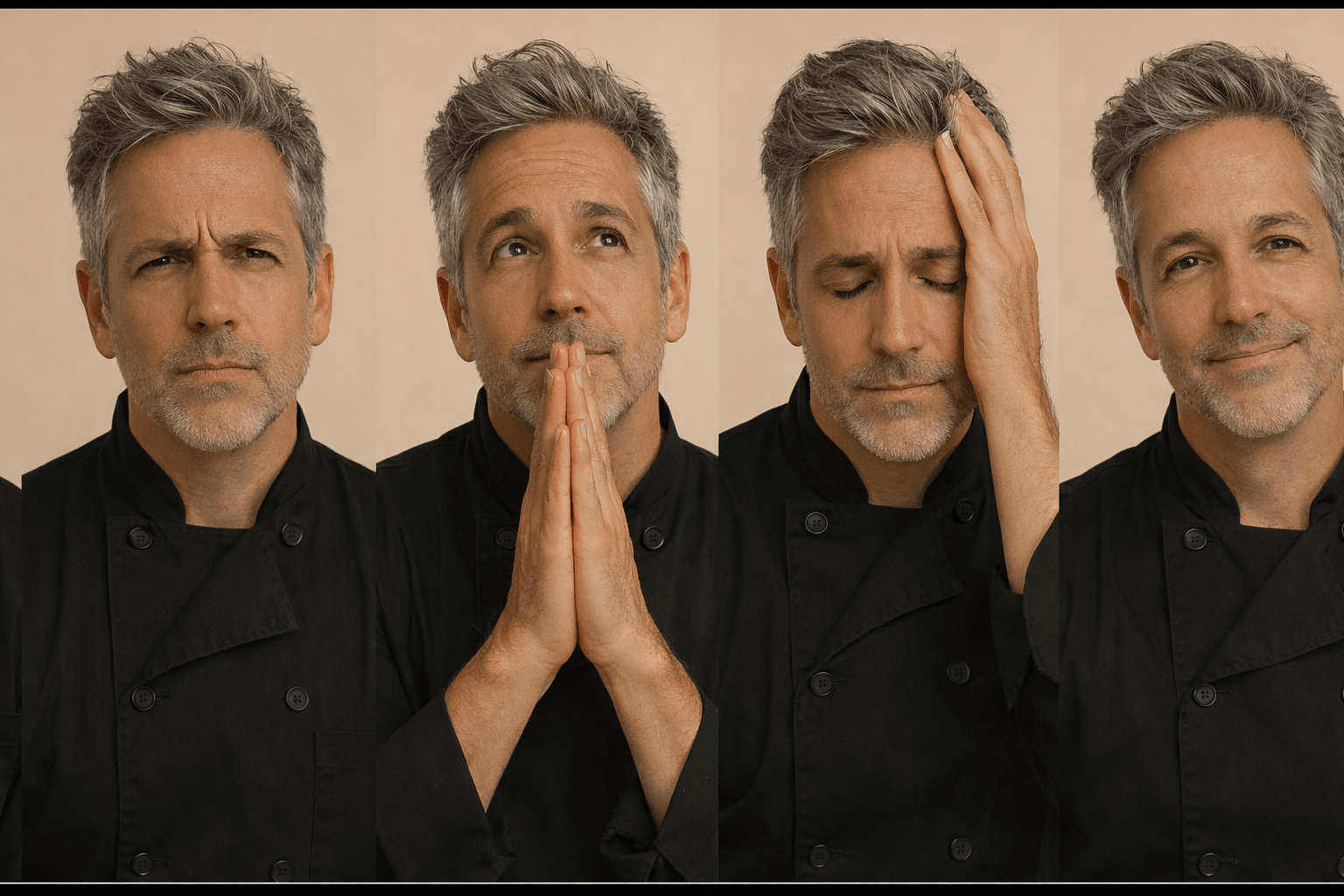
I started this blog back in 2010 when I realized there were plenty of medical articles about sarcoidosis — all clinical, data-packed, and entirely human-free. There were diagrams of lungs, lists of symptoms, and pamphlets that read like someone swallowed a textbook, but there was nothing about how it feels to wake up one morning and realize your body has quietly signed you up for a long-term relationship with chaos. Turns out, the heart doesn’t send a save-the-date when it’s planning to stop working.
At first, I thought I’d talk to a psychologist, just to vent. Three sessions in, we were basically competing for “most cynical” and I realized I didn’t need someone else convincing me that things were grim; I already had a diagnosis for that. So, I quit therapy and opened a WordPress tab instead — the free version of therapy, minus the co-pay.
If you’ve ever lived with a chronic illness, you’ll know the five stages of grief aren’t just for funerals and sad movies. They’re also for those moments when you realize your body now comes with fine print. Let’s start with denial — that fun, fleeting stage where you pretend your defibrillator is just a high-tech Fitbit and nothing has changed. I was there for a while. One month my heart was “Strong as an ox,” according to the cardiologist. The next, it was failing. Literally, my heart decided to call in sick with a 20% ejection fraction. Then came a defibrillator implantation, and I was somehow still going around saying, “Eh, it’s probably fine.”
But denial doesn’t pay rent forever. Anger moved in next — not the tantrum kind, but the silent kind that simmers while you stare at a list of everyday activities you can no longer do. Carry luggage? Nope. Lift heavy flower pots for my wife? Not anymore. That one really stung — not because I suddenly hated terra-cotta, but because having to ask for help felt like the universe handing me a neon sign that read: “You are not who you were.”
The bargaining stage? Yeah, I skipped that one. Who was I going to bargain with? Write a letter to God and offer to become gluten-free in exchange for my ejection fraction going up? I said my prayers, but I didn’t make deals. Maybe I sensed I was being pushed toward acceptance sooner than the manual says.
Depression drifted in quietly — not dramatic or devastating, just a soft, persistent sadness. A mourning for the old me and for the routines I’d lost. I missed being able to lug around whatever I wanted without thinking. I missed being the guy who said, “I’ve got it.” And yes, I was sad for my wife too. She didn’t sign up for this any more than I did.
Then came acceptance — not the kumbaya version, but the practical one. The one that says, “Okay, we are different now. Time to adjust the recipe and make peace with a lower-sodium life.” Acceptance didn’t mean I put on flowy robes and started chanting. It meant I learned to be grateful for the life I still have — one full of love, messy gardens, and occasional naps. And here’s the update: that pulmonary hypertension they said was incurable? It reversed itself. My doctor looked at me like I was a danger to medical certainty. Miracles are real, apparently.
I’m now heading into year twenty of living with sarcoidosis and heart failure. I still have a heart that behaves like an unreliable employee, but we’ve learned to work together. This blog — and the people who read it — have been the backbone of that acceptance. Writing helped me unload the heavy stuff and make room for joy again. Joy in the ridiculous. Joy in the mundane. Joy in the fact that someone else will move the patio furniture now.
Acceptance may look different for everyone, but when you get there — when you wake up one day and realize sadness doesn’t have a lease on your spirit anymore — it’s something precious. And I’m not naive. Denial and anger still come around some days, usually uninvited. But like annoying relatives, I’ve learned to say, “Hello, stay as long as you need, but don’t rearrange the furniture.”
If this resonates — if you’ve ever felt like you were grieving while still alive — leave a comment below or subscribe. There’s room here for your story too. I’d love to hear it.
So…
What’s your hardest “old me” to let go of? Let’s talk.
Discover more from Tate Basildon
Subscribe to get the latest posts sent to your email.
 Tate Basildon