
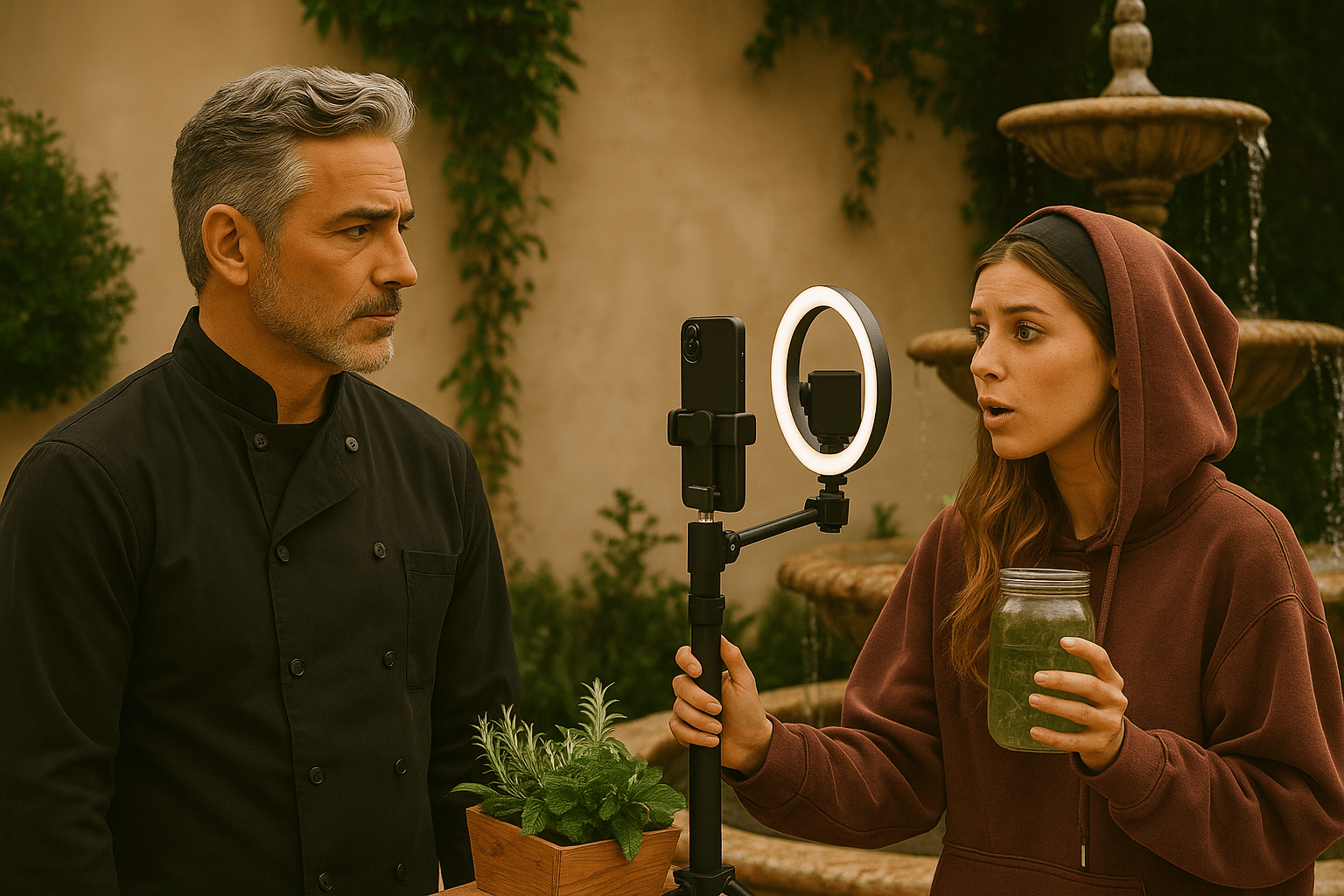
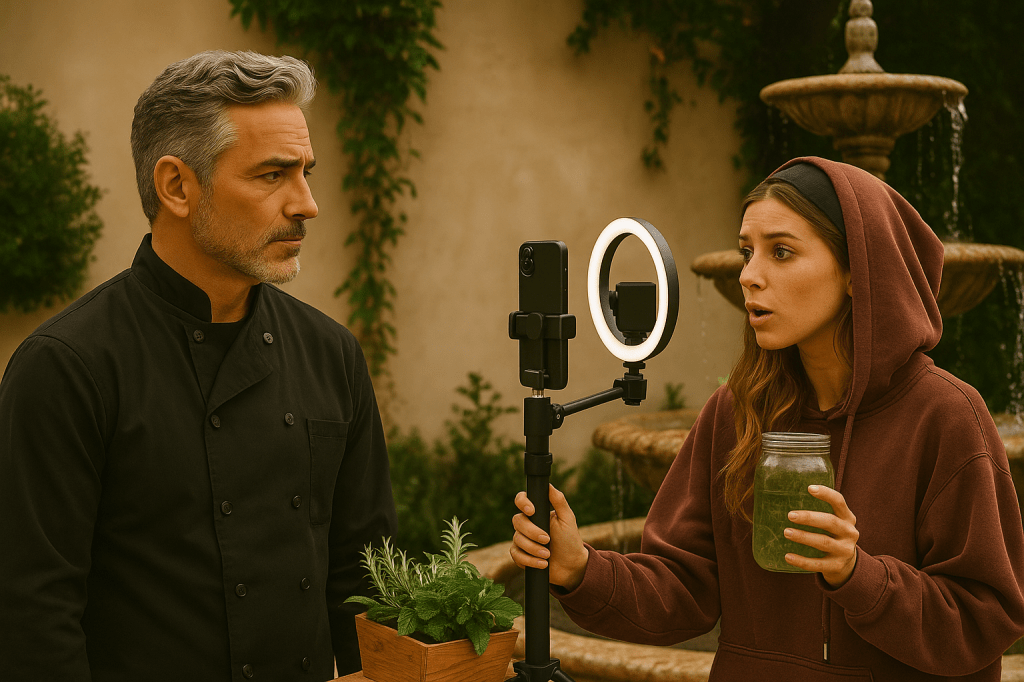
Apparently all it takes to become a medical expert these days is a ring light, a Wi-Fi connection, and the kind of confidence usually reserved for toddlers with capes. Scroll long enough and you’ll find some influencer—sorry, influenz-er—whispering into their camera about “the truth doctors don’t want you to know.” They’ve got a mason jar of mystery liquid, a homemade chart drawn in highlighter, and a vague sense of conspiracy. And somehow, that now passes for health advice.
Meanwhile, the rest of us living with chronic illness—sarcoidosis, heart failure, or anything else that turns your body into a full-time job—are just trying to get through the day without being sold something that’ll end up making things worse. I’ve seen more medical nonsense on TikTok than I ever saw in an entire year of specialist appointments. And that’s saying something.
Here’s where I stand: I absolutely believe in herbal and homeopathic medicine. I use them. I’ve benefited from them. Tremendously. There are remedies and plant-based treatments that have helped my lungs, my energy, and my heart in ways the hospital never could. But the difference is—I didn’t just take someone’s word for it. I researched. I asked questions. I checked sources that didn’t end in “.wellnessdreamz.biz.”
Because while natural remedies can do wonders, “natural” doesn’t mean “risk-free,” and not every TikTok potion is what it claims to be. Some of these so-called “healers” are tossing around advice that’s not just unverified, but downright dangerous—all in the name of clicks and “credibility.” It’s not healing, it’s performance art.
And let’s be honest—doctors aren’t saints either. Some mean well, but too many are more interested in pushing whatever sample box Big Pharma Alice dropped off that morning. You know Alice—she’s the one with the shiny smile and the promise of a “conference” in Hawaii if ten thousand units get prescribed. Suddenly you’re on a new med that costs more than your car payment and gives you side effects that sound like a bad horror movie. So no, I don’t trust everything a doctor says blindly either. Blind faith is bad policy—whether it’s for your physician or your favorite influencer.
People have to take responsibility for their health. You must do your own research. Read the studies. Ask questions. Compare notes. Don’t just follow anyone—on social media or in a lab coat—without verifying what they’re saying. Healing is personal. It’s not one-size-fits-all, and it’s definitely not whatever’s trending on the “For You” page.
What frustrates me most isn’t that people want answers—it’s that they’re being misled by those who don’t have any. Chronic illness makes you desperate for hope, and these influencers serve it up like fast food—cheap, easy, and empty. They mix a little truth with a lot of nonsense, sprinkle in words like “toxins” and “alignment,” and suddenly they’re everyone’s new guru. But hope without evidence is just marketing.
For those of us actually living this—managing medications, symptoms, flare-ups, and fatigue—this isn’t theoretical. It’s survival. I’ve had herbal supplements that made a real difference. I’ve also had doctors roll their eyes because I mentioned them. That’s the problem. Both sides think they’ve got the monopoly on truth. But healing doesn’t live at either extreme—it lives somewhere in the messy, middle ground of common sense, curiosity, and self-advocacy.
So yes, trust your herbs. Trust your homeopath if they actually know what they’re doing. But also trust evidence. And trust yourself enough to check everything before you swallow it—literally or figuratively.
Because the truth is, your body deserves better than clickbait cures and drug reps with vacation packages. You deserve to heal with wisdom, not trends.
Have you ever fallen for (or almost fallen for) bad health advice online? What helped you figure out what was real? Let’s talk in the comments—or subscribe and stick around. Around here, we believe in real healing, real talk, and research that doesn’t require a ring light.
Apparently all it takes to rewrite epidemiology is a ring light, a suspicious amount of confidence, and no actual degree.
And somehow, that combo is now more influential than a double-blind study.
It’s wild out here.
Lately, I can’t scroll for more than two swipes without landing on a TikTol influencer—sorry, influenzer—whispering into their front-facing camera about how the real cure is being hidden from us by, you know, “them.” (Spoiler: they never say who they are, but they’re always lurking and allergic to truth.)
They’ve got homemade charts, a dramatic voiceover, and a hoodie pulled up for dramatic effect. Meanwhile, actual scientists are out here with decades of research, and we’re like, “Nah, Brenda from Boise said to eat more moldy garlic and walk backwards during a full moon.”
As someone living with sarcoidosis, heart failure, and a revolving door of specialists poking me like a lab experiment, I don’t have the luxury of playing Internet Roulette with my health. Chronic illness doesn’t leave room for guesses, vibes, or someone’s cousin’s cleanse that “reversed their autoimmune disease” (but oddly never shows lab results).
Look, I get the appeal. These videos are polished, persuasive, and pumped full of algorithm-friendly drama. But underneath that shiny edit is often a steaming pile of pseudoscience, wrapped in buzzwords like detox, alignment, and natural immunity. Cute. But not helpful.
And here’s the thing that truly burns me: people are desperate. When doctors dismiss you, insurance denies you, and your body feels like a rigged carnival game—you want to believe someone has answers. Even if that someone is standing in a kitchen lit only by LED strips, holding a mason jar of swamp juice and whispering about “the matrix.”
But we can’t afford that kind of hope. Not when lives are at stake. Not when misinformation spreads faster than facts—and somehow gets more likes doing it.
So here’s your gentle but firm reminder:
You deserve real answers.
You deserve real care.
And no, your diagnosis doesn’t need a viral video, it needs a doctor who actually passed something more rigorous than an Instagram Live.
Let’s Make This a Safe Space—For Facts.
Tell me: Have you ever fallen for health misinformation online? What made it feel believable? Let’s talk in the comments—or subscribe and stick around. We get honest here, even when it’s uncomfortable.
Discover more from Tate Basildon
Subscribe to get the latest posts sent to your email.
 Tate Basildon
Great post – TikTok was designed for entertainment not education … there is some slippage, but healthcare deserves individual attention as you say. Linda
PS – I did a shout out of your blog on mine, hope you don’t mind: https://themindfulmigraine.blog/2025/10/17/feeling-a-little-picasso-ish/
LikeLiked by 1 person
Wow. Thanks so much for the shout out. It is very appreciated. I will definitely reciprocate in a post soon!
LikeLiked by 1 person
I’m happy to spread the word – the more voices out there, the better! 🤩
LikeLiked by 1 person